3PL Bridge helps growth brands evaluate, compare, and select rigorously vetted fulfillment partners with operator-grade strategy, network-scale intelligence, and a process built to de-risk every decision.
brands
advised
vetted 3PL
relationships
average savings
opportunity identified









For brands making meaningful fulfillment decisions, not casually browsing providers.
We have no warehouses to fill, so every recommendation is focused on finding the right operational fit for your brand.
Every 3PL in our network is screened for capability, volume fit, service standards, and real-world operating strength.
Built by people who have run logistics operations, negotiated 3PL agreements, and seen where poor-fit decisions break down.
Free to brands, always. We’re paid by 3PL partners, and we explain exactly how that works before any introduction.
The experience was exceptional. Communication was frequent and responses where quick wheninformation was requested. I would absolutely recommend 3PL Bridge to our partners and will beutilizing 3PL Bridge for our future operational needs.

The team at 3PL Bridge go above and beyond to helptheir clients. Communication is a top priority for themand they are extremely quick to keep you up to date. Iam extremely satisfied with the service I was provided.
.png)
3PL Bridge is perfect for our business needs. Within amonth, we signed a contract with our 3PL operations.Thanks again! I will be referring your services to all ofmy fellow business owners

Jordan did an amazing job connecting us with the perfect 3PL for our business needs. Within a month, we signed a contract with our perfect fit. Thanks again! I will be referring your services to all of my fellow business owners.


3PL Bridge helped me find a warehouse solution for my growing business. They took the time to understand my pain points and refer me to the best 3PL clients.

3PL Bridge delivered fast, competitively priced solutions during a tight market. Their transparency and service gave us leverage.

.jpg)


Most brands rely on the same broken process — inbound sales calls, referral guesses, and surface-level RFPs. 3PL Bridge replaces that with a structured selection framework built by operators, not procurement teams.
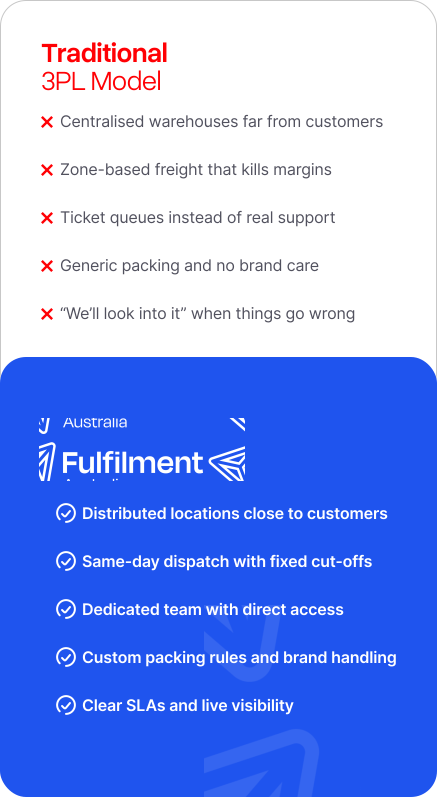
No sales pressure. No provider contact until you've approved the direction.
Within one business day, a senior consultant reviews your requirements. If there's a clear fit, we confirm scope and timeline before anything else moves.
Before we contact a single 3PL, we map your operational requirements, identify your non-negotiables, and build a shortlist criteria document — shared with you for approval.
Only after you've signed off on the criteria do we engage our vetted network. You stay in control of the process at every stage.
Everything you need to understand before evaluating a new 3PL, reassessing an existing partner, or entering a more rigorous selection process.